
Best Audiophile Turntables Under $1000
This is the segment where vinyl stops being a novelty and starts being a real hobby. Somewhere between $300 and $1000, you leave behind fixed cartridges and built-in speakers, and you start dealing with real tonearms, upgradeable components, and sound quality that actually rewards a good pair of speakers.
I always tell people the same thing about this range: it is the best money you will ever spend on a turntable. Below $1000, every extra dollar still buys a meaningful improvement in sound. Above it, the gains get smaller and the price tags get a lot bigger. This is where the hobby makes the most sense financially.
Here is what to know before you buy, and which brands actually deserve your money at this level.
If you do not have time to go through all the details below, here is a quick recap of the models actually worth your money.
| Model | Price | ||
|---|---|---|---|
| Rega Planar 1 | $595 | View on Amazon | |
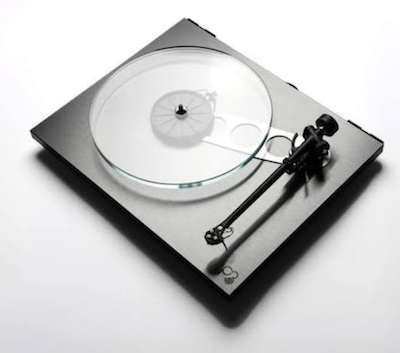 | Rega Planar 3 | $945-$1,099 | View on Amazon |
| Pro-Ject Debut Carbon EVO | $599 | View on Amazon | |
| Pro-Ject Debut Pro | $850 | View on Amazon | |
| U-Turn Orbit Plus | $399 | View on Amazon | |
| U-Turn Orbit Theory | ~$900 | View on Amazon | |
| Technics SL-1500C | $1,199-$1,299 | View on Amazon |
Prices exclude phono preamp and speakers, not included on the Rega, Pro-Ject, and U-Turn models. The Technics SL-1500C slightly exceeds the $1,000 budget but remains the reference for anyone who wants a built-in preamp out of the box.
What Changes at This Price
A few things separate this segment from entry-level:
Real cartridges you can upgrade. Almost everything here uses a moving magnet cartridge mounted on a standard headshell, meaning you can swap it for something better later without buying a new turntable. This is the single biggest reason to buy in this range instead of staying entry-level: you are paying for a platform, not just a finished product.
Better tonearms. The tonearm is the arm that holds the cartridge and lets it track the groove. At this price, tonearms are stiffer, lighter, and better balanced, which means less unwanted resonance reaching the stylus and a cleaner, more accurate sound. This matters more than almost any other spec at this level.
Heavier, better-isolated platters. More mass and better isolation from the motor mean steadier speed and less vibration bleeding into the sound. Acrylic, steel, and glass platters all show up here, each with slightly different sonic character.
No built-in speakers, usually no built-in preamp either. You will need powered speakers or a receiver with a phono input, and possibly a separate phono preamp if the table does not include one. Budget for this. A great turntable connected to weak speakers will always sound worse than it should.
Belt Drive vs. Direct Drive
You will see both in this range, and the choice matters more here than at the entry level.
Belt drive turntables use a rubber belt to connect the motor to the platter. The motor sits physically apart from the platter, which isolates it from vibration and tends to produce a quieter, cleaner sound. Most home-listening audiophile brands (Rega, Pro-Ject, U-Turn) build belt-drive tables for this reason.
Direct drive turntables have the motor built directly under the platter. This gives faster start-up, better long-term speed stability, and no belt to replace over time. It is the standard for DJ use, but Technics has proven with the SL-1500C and SL-1200 series that direct drive can also compete on pure sound quality for home listening.
Neither is objectively better. For most home listeners who want the quietest, most refined sound, belt drive is the safer choice. If you want speed stability, faster startup, or you like the idea of a table that can also handle occasional DJ-style use, direct drive is worth considering.
Brands to Know at This Level
Rega
Rega is the brand most audiophiles mention first when this price range comes up, and the reputation is earned. The company has focused almost entirely on turntables for fifty years, and it shows in how refined their designs are even at accessible prices.
The Planar 1 (around $595) is Rega’s entry point and consistently wins “best value” awards from major hi-fi publications. It is fully manual, has no built-in phono preamp, and requires you to lift the belt manually to change speeds. That sounds like a downside, but it reflects Rega’s whole philosophy: strip away anything that could add noise or complexity, and put the budget entirely into the parts that affect sound. The included Rega Carbon cartridge sounds excellent out of the box and can be swapped for anything aftermarket later.
The Planar 3 (around $945 to $1,099 depending on cartridge) is the table most reviewers point to as the best all-around value in the entire hobby. It has been refined for decades and consistently competes with turntables costing twice as much. If you only ever buy one “serious” turntable in your life, this is the one most audiophiles would tell you to get.
Keep in mind: no Rega in this range includes a built-in phono preamp. Budget an extra $100 to $150 for a separate phono stage, like Rega’s own Fono Mini, if your amplifier or speakers do not already have one built in.
Pro-Ject
Pro-Ject is Rega’s most direct competitor, and the two brands get compared constantly for good reason. Where Rega strips things down, Pro-Ject tends to build in more convenience without sacrificing sound.
The Debut Carbon EVO (around $599) is the standout here. It uses an 8.6-inch one-piece carbon fiber tonearm, which is stiffer and lighter than the aluminum arms found on most competing decks, meaning it resolves more detail without adding its own resonance. It includes a Sumiko Rainier cartridge and electronic speed switching between 33 and 45 RPM, which is more convenient than Rega’s manual belt-lifting approach. No built-in phono preamp, same as the Rega, so plan for that separately.
The Debut Pro (around $850) steps up further with a better Sumiko cartridge and refined tonearm bearings, sitting closer to the top of this segment.
U-Turn Audio
U-Turn is the value play in this segment, and the one brand here that is actually manufactured in the US (Massachusetts). The appeal is straightforward: solid core performance, real upgrade potential, and a lower price than Rega or Pro-Ject for a comparable listening experience.
The Orbit Plus (around $399) includes an acrylic platter and an Ortofon OM5E cartridge, and it punches well above its price for the money. It is a genuinely good starting point in this segment if your budget is tighter but you still want a real upgrade path.
The Orbit Theory, U-Turn’s flagship, moves closer to $900 and competes directly with the Rega Planar 3 and Pro-Ject Debut Pro. Some users report speed stability quirks on U-Turn’s cheaper models when first starting up, so if rock-solid speed consistency matters a lot to you, weigh this against the Rega and Pro-Ject options above.
Technics
Technics occupies a different lane than the other three brands here. Where Rega, Pro-Ject, and U-Turn are belt-drive, purist designs, Technics brings direct-drive engineering and a more feature-complete package.
The SL-1500C (around $1,199 to $1,299, right at the edge of this segment) includes a built-in phono preamp and a detachable headshell for easy cartridge swaps, along with the speed stability and durability Technics is known for. It is a fuss-free, “last turntable you will ever need to buy” kind of option for listeners who want great sound without the manual rituals of a Rega. If your budget can stretch slightly past $1,000, it is worth serious consideration alongside the Planar 3.
How I Would Choose
If you want the purest, most refined sound and do not mind a fully manual experience, the Rega Planar 1 to start, or the Planar 3 if your budget allows it, is the classic audiophile choice.
If you want a bit more convenience (electronic speed switching, no belt-lifting) without giving up sound quality, the Pro-Ject Debut Carbon EVO is the best all-around pick in this range.
If budget is tighter but you still want real upgrade potential and solid sound, the U-Turn Orbit Plus gets you into serious listening for under $400.
If you want a built-in phono preamp, effortless daily use, and do not mind stretching slightly over $1,000, the Technics SL-1500C is worth the reach.
Do Not Forget the Rest of the Chain
A turntable in this range will expose weaknesses elsewhere in your setup faster than an entry-level table would. A few things worth budgeting for alongside the turntable itself:
- A phono preamp, if your table (Rega, Pro-Ject, U-Turn) does not include one, typically $100 to $200 for something that matches the turntable’s quality
- Decent speakers. Powered bookshelf speakers in the $150 to $300 range are a reasonable match; going much cheaper here wastes what the turntable is capable of
- A cartridge upgrade budget for later. Most tables in this range accept aftermarket cartridges from $50 well into the hundreds, and it is usually the single cheapest way to meaningfully improve the sound of a table you already own
Once you have lived with a turntable in this range for a while, you will know whether you want to keep climbing toward the high-end segment, or whether this is genuinely the sweet spot where the hobby settles for you. For a lot of long-time collectors, it is the latter.