
Best DJ Turntables: A Complete Guide
DJ turntables live in a completely different world from the home listening decks covered elsewhere on this site. Nobody buys a DJ turntable to hear the last percentage point of detail in a jazz recording. They buy it to survive years of scratching, beat matching, and club use without the motor giving out or the pitch drifting mid-set. That is a different engineering problem, and it produces a different kind of turntable.
I have set up more than a few of these behind the counter over the years, for everyone from bedroom hobbyists to working DJs building their first proper booth setup. Here is what actually matters in this segment, and which brands are worth your money.
If you do not have time to go through all the details below, here is a quick recap of the models actually worth your money.
| Model | Price | ||
|---|---|---|---|
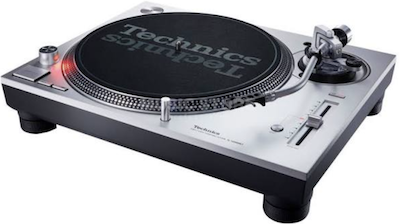 | Technics SL-1200 MK7 | $1,299 | View on Amazon |
| Pioneer DJ PLX-1000 | $700-$1,000 | View on Amazon | |
| Pioneer DJ PLX-500 | $300-$500 | View on Amazon | |
| Reloop RP-7000 MK2 | View on Amazon | ||
| Audio-Technica AT-LP140XP | <$600 | View on Amazon | |
| Audio-Technica AT-LP120XUSB | View on Amazon |
The Pioneer DJ PLX-1000 is sold without a cartridge: budget an extra $100 to $150 for a suitable cartridge (an Ortofon Concorde DJ, for example) before you can actually use it.
Why DJ Turntables Are Built Differently
The single most important spec in this segment is drive type, and there is really only one right answer: direct drive. On a direct drive turntable, the motor sits directly under the platter. That means instant startup, rock-solid speed stability, and enough torque to resist the physical pushing and pulling of scratching and beat juggling without the platter slowing down or stalling.
Belt drive turntables, the standard in home audiophile listening, use a rubber belt between the motor and the platter. That belt slips under pressure, which is exactly why belt drive is unsuitable for DJ use. If a turntable you are considering does not clearly say direct drive, it is not built for this job, no matter how it is marketed.
Torque is worth understanding too. It measures how quickly the platter returns to full speed after you stop it by hand, which matters directly for scratching and beat juggling. Higher torque numbers mean faster recovery and a more confident feel under your hands. This is one of the real differences between an entry-level DJ deck and a professional one, even when both look similar on the outside.
Beyond drive type and torque, a few other things matter in this segment:
- Pitch control range, usually adjustable between 8% and 16%, lets you speed up or slow down a track to match tempos
- Quartz lock, which keeps speed absolutely stable once you have set the pitch, so it does not drift during a long set
- Removable headshell and standard cartridge mount, so you can fit the cartridge style you prefer, since many decks in this segment do not include one at all
- Build weight, because a heavier chassis resists vibration from speakers and crowd noise better than a light one
Brands to Know at This Level
Technics
Technics is the name that defines this entire segment. The SL-1200 series, sold as the SL-1210 in Europe and the SL-1200 in the US, has been the industry standard since 1979, and DJs still measure every other deck against it. When Panasonic discontinued the line years back, it caused real anxiety in the DJ community. Its return with the current Mk7 generation was treated as a genuine relief across the industry.
The SL-1200 MK7 (around $1,299) remains the gold standard for a reason. It combines a fully damped, rigid chassis with a high-torque direct-drive motor, and the vibration isolation is good enough to keep the sound clean even next to loud club speakers. It comes with the cables, slipmat, and 45 RPM adapter you need out of the box. It is also the most expensive deck most DJs will consider, and it is light on extra features compared to some competitors. What you are paying for is reliability and reputation built over four decades, and among working DJs, that reputation is not just marketing. Buying secondhand is genuinely reasonable with Technics specifically, since the build quality holds up well over years of use.
Pioneer DJ
Pioneer DJ is the second most common choice in club booths worldwide, and it is the brand most often recommended as a Technics alternative that does not compromise on professional feel.
The PLX-1000 (typically $700 to $1,000, depending on retailer) is a direct match for the SL-1200 MK7 in torque and build quality, at a somewhat lower price. Note that it does not include a cartridge, so budget an extra $100 to $150 for something like an Ortofon Concorde DJ cartridge before you can actually use it.
The PLX-500 (around $300 to $500) is Pioneer’s entry point, and one of the most popular choices for DJs who are still learning. It includes USB recording and compatibility with Rekordbox DVS software, which makes it a reasonable bridge if you eventually want to move toward digital DJing without giving up the feel of real vinyl.
Pioneer also makes hybrid decks like the PLX-CRSS12, which blend traditional vinyl control with digital DVS integration, aimed at DJs who want the tactile feel of a turntable while controlling digital tracks.
Reloop
Reloop has built a reputation as the strongest value alternative to Technics, delivering nearly the same experience for meaningfully less money.
The RP-7000 MK2 (competitively priced below the PLX-1000) is frequently cited by working DJs as the best value pro-level deck on the market, adding features Technics and Pioneer do not include, like torque and brake adjustment controls and a second start and stop button positioned for vertical scratch and battle setups. The RP-8000 MK2 pushes further into hybrid territory, similar to Pioneer’s CRSS12, for DJs who want DVS compatibility built in.
Reloop’s cheaper models, like the RP-2000 MK2, are best bought new rather than secondhand. The savings on a used entry Reloop deck are small, and failure rates climb quickly once these units have real hours on them.
Audio-Technica
Audio-Technica sits at the accessible end of the DJ segment and is consistently the recommendation for anyone learning the craft rather than already working professionally.
The AT-LP140XP (under $600) is widely considered the smartest first purchase in this entire category. It uses a quiet DC motor, a cast aluminum build, and enough torque for any style of DJing, backed by a notably long warranty for the price. The AT-LP120XUSB is Audio-Technica’s other popular entry option, adding USB output for digitizing records, and it has built a reputation through sheer volume of positive reviews from beginner and hobbyist DJs.
How I Would Choose
If you are just learning: the Audio-Technica AT-LP140XP or the Pioneer DJ PLX-500 both deliver real direct-drive performance and enough torque to practice proper technique, without the cost of a professional deck you do not need yet.
If you are a serious hobbyist or working DJ on a budget: the Reloop RP-7000 MK2 gets you most of the Technics experience for meaningfully less money, and the Pioneer PLX-1000 is the safer bet if you want the closest thing to Technics without paying Technics prices.
If you want the industry standard and plan to keep it for years: the Technics SL-1200 MK7 is worth the price. This is the deck that club owners, booking agents, and other DJs will recognize on sight, and the reliability track record over decades is hard to argue with.
A Practical Note Before You Buy
Check carefully whether a cartridge is included. Pioneer’s PLX-1000, in particular, ships without one, and that extra $100 to $150 needs to be part of your budget from the start, not an afterthought after the turntable arrives. The same goes for slipmats, RCA cables, and 45 RPM adapters on some of the more stripped-down decks. None of this changes the recommendations above, but it does change your total spend, so plan for it before you check out.